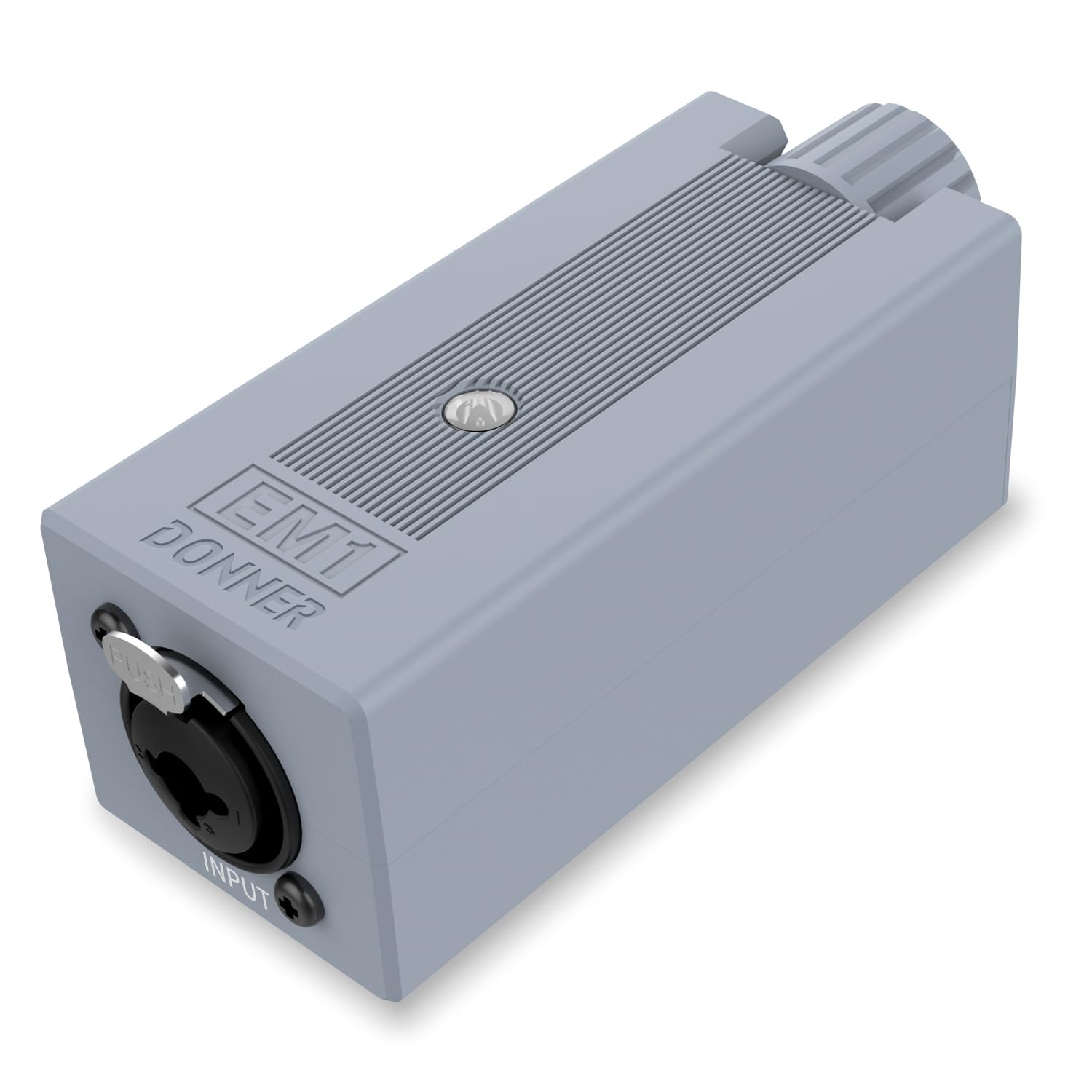
The Donner EM1 is a rechargeable personal monitor amplifier designed to make a wired headphone or in-ear monitoring setup easier to carry onstage.
This Donner EM1 review looks at its input options, stereo/mono switching, battery life, and the situations where a compact belt-pack amp makes sense.
Donner EM1 Review Summary
The quick verdict
800+ ratings
Read Amazon ReviewsDonner EM1
A compact rechargeable headphone amp for performers who need a belt-pack monitor with XLR or TRS input and a 3.5 mm headphone output.
- XLR and TRS input connectors use a locking mechanism for connecting a compatible audio source.
- A stereo/mono source switch is provided to match the source connection.
- A 3.5 mm output jack connects to compatible headphones or in-ear monitors.
- The high-power design is intended for high-impedance professional headphones.

Pros
- Portable belt-pack form with a solid metallic clip.
- Offers both XLR and TRS input options.
Consider before buying
- It does not support microphones, so it cannot serve as a microphone preamp.
- The 3.5 mm output and source connectors may require checking cable compatibility with an existing monitoring rig.
Read the full review summary
The EM1 combines an XLR or TRS input, a 3.5 mm output, a stereo/mono source switch, and a rechargeable battery in a compact metal unit with a belt clip.
That mix is aimed at musicians who want a personal headphone monitor connected to a compatible audio source without carrying a larger headphone amplifier.
Its stated high-power design is intended for professional headphones with high impedance, while the controls and connector setup remain fairly focused. It may suit rehearsal, stage, or other mobile monitoring routines, provided the source connection matches the setup.
The product description specifically says it does not support microphones, so it should be treated as a headphone amp rather than a microphone preamp.
The buying factors
Donner EM1 Scorecard
Editorial scores reflect listed features and buyer fit; they are not laboratory measurements or customer ratings.
Portable design
Compact construction and a metallic belt-pack clip support carrying it with a performer’s gear.
Input flexibility
XLR and TRS input connectors offer two common ways to connect a compatible audio source.
Headphone drive intent
Its high-power design is presented for high-impedance professional headphones, though no measured output figures are provided.
Monitoring versatility
A stereo/mono source switch can accommodate different source connections and monitoring needs.
Battery convenience
The rechargeable Li-ion battery is specified to run for up to 12 hours, making it suitable for extended sessions when charged.
Setup clarity
The focused interface is straightforward in concept, but buyers still need to match their source, cable, and headphone connection.
Key Features and Specifications of Donner EM1
- XLR and TRS input connectors use a locking mechanism for connecting a compatible audio source.
- A stereo/mono source switch is provided to match the source connection.
- A 3.5 mm output jack connects to compatible headphones or in-ear monitors.
- The high-power design is intended for high-impedance professional headphones.
- A rechargeable Li-ion battery is specified for up to 12 hours of operation.
- Power and battery charging status are indicated by LEDs.
- A compact metallic housing and belt-pack clip are designed for portable use.
Pros and Cons of Donner EM1
Pros
- Portable belt-pack form with a solid metallic clip.
- Offers both XLR and TRS input options.
- Includes a stereo/mono switch for adapting to the source connection.
- Rechargeable battery operation is specified for up to 12 hours.
Consider before buying
- It does not support microphones, so it cannot serve as a microphone preamp.
- The 3.5 mm output and source connectors may require checking cable compatibility with an existing monitoring rig.
- The description provides no output-level or impedance figures, so buyers should confirm suitability for a specific headphone before relying on it.
Who Should Buy Donner EM1?
Good fit
Consider the EM1 if you need a compact headphone amplifier to wear or carry during rehearsals and performances.
Its belt clip, rechargeable power, and XLR/TRS inputs suit a setup where an audio source is available nearby and a performer wants a personal wired headphone feed.
It is especially worth considering if your headphones are high impedance, since that use is part of the amp’s stated design intent.
Before buying, check that your source has a compatible output, that your headphone connection works with the 3.5 mm jack, and that the stereo/mono switch aligns with the signal you need.
Who should skip it
Skip it if you need a device that accepts a microphone directly; the EM1 is not described as supporting microphones.
Also look elsewhere if your setup requires a different headphone connector or needs documented output measurements before you can confirm a match.
Donner EM1 Review: Practical Fit for Personal Monitoring
Input choices and cable planning
XLR and TRS inputs give the EM1 flexibility for connecting to different compatible audio sources.
That flexibility depends on the source and cable arrangement: verify the output type on the mixer or other equipment and select the stereo/mono setting that fits the connection before a session.
Matching headphones to the amp
The high-power design is positioned for high-impedance professional headphones, which makes headphone matching central to the decision.
Because no numerical output specifications are given, buyers with demanding headphones should check compatibility with their particular model rather than assume every high-impedance pair will reach their preferred listening level.
Battery use in mobile setups
A rechargeable Li-ion battery rated for up to 12 hours can reduce dependence on a nearby power outlet during a long rehearsal or performance.
Actual use can vary by setup, so charging before a session and checking the LED indicators are sensible parts of a portable monitoring routine.
What the EM1 is designed to do
This is a personal headphone monitor amplifier with a 3.5 mm output, not a general-purpose microphone preamp.
Its narrow role helps keep the unit compact, but buyers should make sure the signal path is already available from their audio equipment and that the EM1 is only being asked to drive the headphones.
Alternatives to Donner EM1
No alternative model is recommended here. Compare the input, output, power, and portability needs of your monitoring setup before choosing another option.
Is Donner EM1 Worth It?
The Donner EM1 is worth considering for performers who want a rechargeable, belt-pack headphone amp with XLR or TRS input and a 3.5 mm output.
Its portable design, stereo/mono switch, and up-to-12-hour battery specification make it a practical candidate for personal monitoring.
Buy it when those connections match your audio source and headphones, especially if you use high-impedance professional headphones.
Check the specific headphone and cable compatibility first, and choose another type of device if you need microphone support or confirmed output measurements.
Your review at a glance
800+ ratings
Read Amazon ReviewsDonner EM1
A compact rechargeable headphone amp for performers who need a belt-pack monitor with XLR or TRS input and a 3.5 mm headphone output.
- XLR and TRS input connectors use a locking mechanism for connecting a compatible audio source.
- A stereo/mono source switch is provided to match the source connection.
- A 3.5 mm output jack connects to compatible headphones or in-ear monitors.
- The high-power design is intended for high-impedance professional headphones.